Search This Blog

Tuesday, July 10, 2012

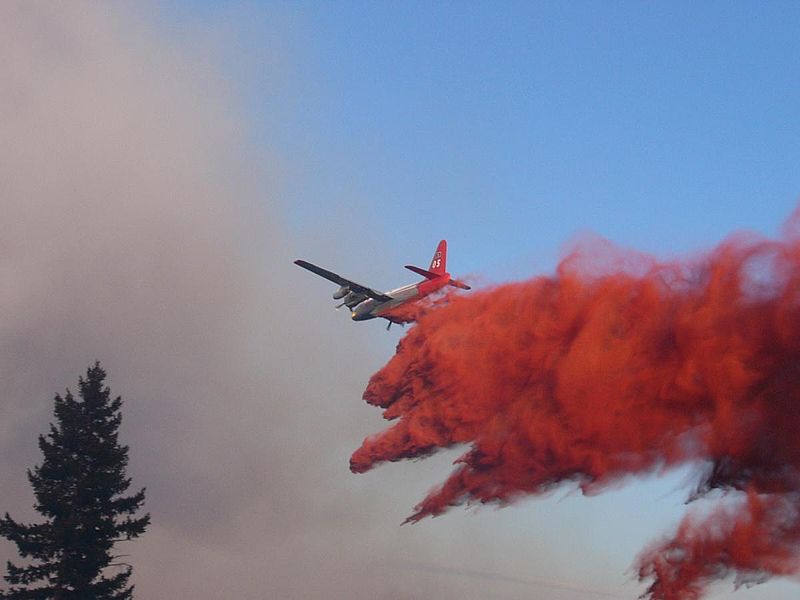
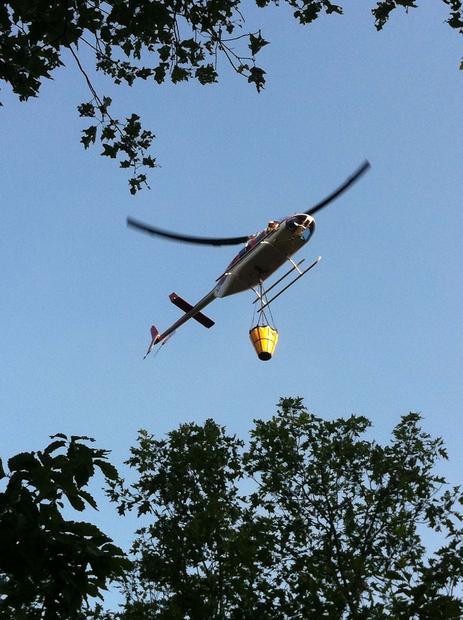
Putting the wet stuff on the red stuff with aircraft


It now seems that the heat wave affecting Virginia has broken and with that some rain is beginning to occur in places which are a welcomed sight for firefighters, farmers and all of Virginians. However with the rains there have been a few scattered storm related problems. Power outages continue to be a major issue.
Power Outages as of 1900 9 July:
Isolated severe thunderstorms during the afternoon and evening of 8 July and 9 July caused additional power outages across Virginia. Dominion Power had completed all power restoration from the 29 June storm. 
Statewide                                                                    9,014 (-4,031 since Sit Rep #15)

Dominion                                                                    3,629 (-2,916)
·         Southeastern Virginia                                                         1,877
·         Northern Virginia                                                             750
·         Shenandoah Valley/Western Piedmont                 592
·         With respect to 8 July storms, power restoration projected to be completed on 10 July
APCO                                                                           5,385 (-1,115)
·         Amherst County                                                     2,880

Since there is no real new news about wildfire activity
 in Virginia I thought I would talk about water. No not the
 water that is currently falling from the sky but about the
 water that is delivered on a wildfire from a variety of aircraft.
 I hope you find this info interesting and informative.


Aerial Firefighting Tutorial
Introduction
The use of aircraft to drop fire retardant, foam, or water to suppress wildfires is an essential wildland firefighting tool. The speed, mobility and retardant delivery capability of aerial firefighting aircraft make them very effective resources in support of firefighters on the ground. The variety of aircraft available within U. S. aviation assets provides an appropriate firefighting capability for nearly every wildland fire situation, from wilderness to the urban interface.
Aircraft
There are three primary kinds of aerial firefighting aircraft available within the U. S.
        
  • Multi-Engine Airtankers: 


Multi-engine airtankers are comprised of ex-military and retired commercial transport aircraft. They carry from 1800-3,600 gallons of retardant. The speed, range, and retardant delivery capability of these large capacity airtankers make them very effective in both initial attack and large fire support. These airtankers typically make retardant drops from a height of 150 to 200 feet above vegetation and terrain, at airspeeds from 125 to 150 knots. Large fixed-wing airtankers have complex, computer controlled retardant dispersal systems capable of both precise incremental drops and long trailing drops one-fourth of a mile or more in length. Retardant flow rates can also be controlled to vary the retardant coverage level dispersed as required by the intensity of the fire behavior and vegetative fuel type.
  • Helicopters: 


Small, medium and large helicopters carry from 100 to 3,000 gallons of water, foam, or retardant in either buckets slung beneath the aircraft, or in fixed-tanks. Large helitankers can be very cost effective, making rapid multiple drops of 2,000 gallons or more on escaping wildfires by refilling at nearby water sources or at portable retardant bases. The internally mounted retardant tanks for the larger helicopters are also computer controlled, which allow them to drop precise incremental patterns or long trailing lines as required by the fire situation. This is particularly important in urban/ wildland fire interface situations near water sources where they can bring to bear rapid revisit times and precise retardant dropping accuracy. Small and medium helicopters are most effective in the direct support of firefighters on the ground, making precision drops on specific targets.
  • Single Engine Airtankers (SEATS): 


These small, fixed-wing aircraft carry from 400-800 gallons of foam or fire retardant. SEATS can operate from remote airstrips and open fields or closed roads, reloading at portable retardant bases. SEATS are predominantly modified agricultural aircraft; however, the 800-gallon Air Tractor 802 is designed specifically for wildland firefighting. SEATS are most effective in the initial attack of small wildfires within 50 miles of a reload base where turn-around times are short and repeated drops can be made quickly.


And now for some Water Trivia


  • although three percent of the Earth’s water is fresh, only one percent is available for human consumption. In fact, if all the world’s water were fit into a gallon jug, the fresh water available for human use would equal only about one tablespoon.
  • 80 percent of the Earth’s surface is water—it acts as an insulator and helps regulate global temperature.
  • water is the only substance found on Earth naturally in three forms—water can be solid, liquid, or gas.
  • the average person uses well over 133 gallons of water per day.
  • Structural firefighters estimate to protect a Single-family dwelling takes about 5,000 gallons of water.


Trivia Challenge
1. How long can a human survive without water?
a. one day
b. one week
c. one month
d. two months
2. How much does one gallon of water weigh?
a. 3.52 pounds
b. 15.62 pounds
c. 8.34 pounds
d. 11.25 pounds
3. On average, how much water is used to hand wash a sink full of dishes?
a. 10 gallons
b. 20 gallons
c. 30 gallons
d. 50 gallons
4. Approximately how many gallons of water does it take to make four new tires?
a. 2,000
b. 1,000
c. 1,600
d. 150
5. Approximately how many gallons of water does it take to manufacture a new car?
a. 3,000
b. 9,000
c. 20,000
d. 39,000
6. In the United States, from what material were the first water pipes made?
a. metal
b. rubber
c. fire-charred logs
d. clay


Trivia Challenge - Answers
1. b
2. c
3. c
4. b
5. a
6. c

HOW MUCH WATER We talked about various aircraft delivering between 100 and 3,000 gallons of water/retardant but just how much is 1,000 gallons? can you visualize?
Here are a few ways to help...
One acre foot equals 326,700 gallons of water. Picture a football field (approximately one acre) covered one- foot deep in water.
An olympic sized swimming pool holds about 660,000 gallons.


Friday, July 6, 2012

Today is the Anniversary of the tragedy Storm King Mountain

PLEASE take a moment to reflect on what is lost everytime we loose a brother, sister, mother, father, wife, husband or friend to the ravages of a wildfire.


Incident Name: South Canyon Fire on Storm King Mountain
Date: 7/6/94
Personnel: 14 lives lost
Age:
Agency/Organization: 13- US Forest Service & 1- BLM
Position: 9 Prineville Hotshots, 2 McCall Smokejumpers, 1 Missoula Smokeumper, 2 Helitack

Summary: Fourteen firefighters -- 13 USFS and 1 BLM -- died while assigned to Storm King Mountain Fire near Glenwood Springs CO.

Prineville Hotshots


Kathi Julie Beck, 24 - Ochoco National Forest in Oregon
Tamera "Tami" Jean Bickett, 25 - Ochoco National Forest
Scott A. Blecha, 27 - Ochoco National Forest
Levi Brinkley, 22 - Ochoco National Forest
Douglas Michael Dunbar, 22 - Ochoco National Forest
Terri Ann Hagen, 28 - Ochoco National Forest
Bonnie Jean Holtby, 21 - Ochoco National Forest
Robert Alan Johnson, 26 - Ochoco National Forest
Jon Roy Kelso, 27 - Ochoco National Forest

Smokejumpers

Donald K. Mackey, 34 - Missoula Smokejumper
Roger W. Roth, 31 - McCall Smokejumper
James R. Thrash, 44 - McCall Smokejumper

Helitack


Robert E. Browning Jr., 28 - Helitack from Savannah River Forest Station, age 28
Richard Tyler, 33 - BLM Helitack

Narrative: On July 6, fourteen wildland firefighters lost their lives when a wind shift resulted in a blow-up fire condition that trapped them on the uphill and downwind position from the fire on Storm King Mountain, Colorado. The fourteen firefighters included smokejumpers Don Mackey, Roger Roth, and James Thrash; Prineville Hot Shots John Kelso, Kathi Beck, Scott Blecha, Levi Brinkley, Bonnie Holtby, Rob Johnson, Tami Bickett, Doug Dunbar, and Terri Hagen; and helitack crew members Richard Tyler and Robert Browning.

Browning and Tyler were killed when their escape route was cut off by a large drop and they were overrun by the fire. The other firefighters were killed as they moved towards the ridgeline to escape the fire advancing towards them from below. According to witness accounts, the firefighters were unable to see how dangerous their position had become because of a small ridge below them. They had been moving slowly and were still carrying their equipment as the fire blew up behind them to a height of over 100 feet. At this point the crew dropped their tools and made an uphill dash for the top of the mountain but only one person made it over to survive. The fire overran the remaining twelve firefighters and reportedly reached a height of 200 to 300 feet as it crossed over the ridge. It was estimated to be moving at between 10 and 20 miles per hour at the time of the blow-up. Several other firefighters in various other locations on the mountain became trapped by the flames but were able to make it to safe positions or deploy their emergency shelters. Post incident investigations have determined that the crews fighting the fire violated many safety procedures and standard firefighting orders. Unknown to the firefighters, the weather conditions prevalent that day had forecast a "red flag" meaning the most dangerous wildfire conditions. (From USFA Database)


obert Browning

Tuesday, July 3, 2012

Have a Safe and Fire Free 4th

While legal fireworks and sparklers are a popular part of July 4th celebrations, they are a danger to users, pets, and the environment. In many areas of Virginia, fireworks could become a cause of wildfires.

Fireworks that have finished burning are still extremely hot, and they can smolder in dry grass or leaves before a fire ignites. One spark is all it would take for a wildfire to start.

Keep a bucket of water; wet towel, and a fully-charged garden hose nearby. Children and pets should also be kept a safe distance away from igniting and spent fireworks.

Many types of fireworks (including firecrackers, sparklers, bottle rockets, skyrockets, torpedoes and other fireworks that explode, travel laterally, rise into the air, or fire projectiles into the air) are illegal in Virginia unless you are a licensed contractor. A good alternative to personal fireworks are the community displays. Check your local news source for information on times and locations, or go online.


C-130 accident info out of NIC

***INITIAL ACCIDENT INFORMATION and NOTIFICATION FORM***

Date and Time: 7/01/12
Initially Reported By – Name / GACC: Region 2
NICC Coordinator on Duty:  Rick Squires
Location of Accident - GACC / Unit / Incident Name: White Draw Fire, Black Hills, SD
Fatalities – Number: 2
Injuries – Number: Two survivors, status unknown
Aircraft Involved - Make / Model / Tail # / Owner: MAFFS #07 North Carolina
Vehicle Involved - Make / Model / Agency: C-130H

***Cause, names and employing agencies, additional information***
A BLM ASM platform was also engaged as a lead with the C130 when the accident occurred. The ASM/Lead experienced a severe downdraft while approaching the intended retardant drop zone with the C130 in trail. This is being investigated by the USFS as a separate Incident With Potential.


No additional Information is available at this time -

National Interagency Coordination Center

Virginia’s firefighters mourn


All of Virginia’s firefighters mourn the loss of the two C-130 crew members and our hearts go out to their family, friends and co-workers.


Colorado Springs, Colorado (CNN) -- Two crew members on a U.S. Air Force plane died in a weekend crash while trying to battle one of the Western wildfires that have burned hundreds of thousands of acres, family members said.
The C-130 aircraft crashed Sunday night while fighting the White Draw Fire near Edgemont, South Dakota, the U.S. Northern Command said.
Military officials said there were casualties in the crash but gave no other information Monday. But family members told CNN affiliate WBTV that two members of the crew died in the crash and identified them as Lt. Col. Paul Mikeal and Master Sergeant Robert Cannon.

The crash forced officials to ground the entire fleet of eight firefighting C-130 planes as Western states grapple with one of the busiest and most destructive wildfire seasons ever. It wasn't immediately clear what impact their absence would have on firefighting across the region.

There are many video cliops of these C-130's in action and the two video links below are  two very good ones giving you an inside look at these amazing pieces of equipment and their crews.


Among the fires elsewhere:

— Utah: Hundreds of firefighters were trying to hold the Clay Springs fire from advancing on the ranching towns of Scipio and Mills. The fire had destroyed one summer home and threatened 75 others. The fire was 48 percent contained on Sunday.

— Montana: More evacuation notices were issued in the southeastern part of the state after a wildfire jumped a highway overnight and was spreading Monday. The state had 10 large wildfires, more than any other state.

— Wyoming: Late Sunday night, authorities called for evacuations in an area of southern Albany County where a fast-growing wildfire was burning. It wasn't immediately clear how many residences were affected.

— Idaho: Firefighters in eastern Idaho had a wildfire 80 percent contained Sunday but remained cautious with a forecast of high winds and hot temperatures that could put hundreds of homes at risk.

— Nevada: More than 300 firefighters were battling a wildfire in a remote area in the east.

— New Mexico: A wildfire burning on the western border of Carlsbad Caverns National Park had grown to 5,000 acres

Monday, July 2, 2012

Increase in wildfire activity and an update on Neighbor Mtn and Point 2

In addition to the 2 fires below (the Neighbor Mountain and Point 2) the state had 33 fires for 177 acres over the weekend. Several place received rain withe the storms but many areas received little or no rain, just heavy winds and lightning. 19 of the 33 fires reported were lightning fires.


Neighbor Mountain Fire Incident Update

Monday, July 2, 2012
Information: 404-354-5027 or 404-354-5118
Increased smoke is expected from the Neighbor Mountain Fire.
Overview:
precipitation from the recent storm, but has again begun to increase due to drying conditions. This will result in
increased smoke.
The fire has been burning since June 26, 2012. Fire activity was reduced as a result of
Size:
Shenandoah National Park.
Estimated at 1125 acres as of 4:00 p.m. on 7/01/12, and is still entirely within the boundaries of
Containment:
20% at 4:00 p.m. on 7/01/12. No estimated date of containment.
Fire Conditions:
lines. The forest is a mix of hardwoods, mountain laurel, blueberry and leaf litter.
The fire is burning in steep, rocky terrain and moving slowly downhill toward containment
Today’s Strategy:
Construction of indirect lines is to be completed today.
Crews will continue to build and strengthen lines with direct attack as conditions permit.
Current Resources:
a unified command with the National Park Service and the Virginia Dept. of Forestry to manage the fire.
Resources assigned to the fire include personnel from the National Park Service, USDA Forest Service, US
Fish and Wildlife Service, Virginia Department of Forestry, Mississippi Forestry Commission, and many other
cooperating agencies. There are 237 personnel working on the incident.
The Southern Area Red Team, as a Type 2 incident management team has established
Threats:
No immediate threats to structures.
Fire Closures:
Cutoff, Knob Mountain, Neighbor Mountain, Jeremys Run. Byrd’s Nest #4 Shelter.
The following trails are closed: Appalachian Trail between Elkwallow and Beahms Gap, Knob Mountain
Visitor facilities, Skyline Drive, local highways and amenities all remain open.
Incident Information Sources:
communities – neighbormtnfire@gmail.com. Current information will be available on the park twitter and
facebook sites – http://www.facebook.com/shenandoahnps and
Fire details can also be found on

POINT 2 FIRE

Incident Overview

The Point 2 Wildland Fire is located entirely on national forest lands on Massanutten Mountain between Veach Gap and Sherman Gap in the counties of Warren and Shenandoah. The fire poses a potential threat to homes and private land on the east and west sides. The public is always advised to prepare for a worse case scenario.
Residents should be prepared for smoky or hazy conditions in towns or on road ways. The fire will continue to grow on its own due to hot, dry weather and dry soil conditions.
The terrain is steep, rocky and remote making access to the fire extremely challenging.
Because of the active fire behavior, the following trails are closed until further notice:
The Massanutten National Recreation (#408) from Shawl Gap to Veach Gap. The Tuscarora Trail (#405.1) is closed from Shawl Gap to Panhandle Road (SR 613).
Sherman Gap (#403) and Veach Gap (#484) Trails are also closed. The Little Crease Trail Shelter is also closed to all public use.
The number one priority is public and firefighter safety.
Please use caution with all campfires. Be advised that fireworks are prohibited on national forest lands.

Basic Information

Incident TypeWildfire
CauseLightning
Date of OriginMonday June 25th, 2012 approx. 01:30 PM
LocationGeorge Washington & Jefferson National Forests, Lee Ranger District: Massanutten Mountain
Incident CommanderOscar Montijo/ Jay Collet

Current Situation

Total Personnel218
Size890 acres
Percent Contained30%
Fuels InvolvedPredominately hardwood with some areas of pine and understory brush.
Fire BehaviorBacking and flanking during the burn out operation. Fire continues to burn into the deep duff layer on the dryer ridges.
Significant EventsFire continues to spread east and south along the ridge tops. Began aerial burnout operation on the east side.

Outlook

Planned ActionsPlans for Monday 7/2/12: Firefighters will continue to construct, hold and inprove control lines with bulldozers and hand tools. Assess opportunities to burn out as needed. Complete burn out operations on the east side of the fire. Helicopters will drop water to slow down the fire spread, bring supplies to firefighters and provide aerial ignition for burnout. The public can expect to see smoke on Monday as the fire continues to spread toward control lines and burn out operations are used to burn remaining fuels on the west side. Fire crews will be on the fire Sunday night.
Growth PotentialThere is medium growth potential due to heavy, dry fuels, the steep rugged terrain, difficult access and weather conditions.
Terrain DifficultyTerrain is extremely steep, rocky and rugged making access to the fire challenging for firefighters.
RemarksResidents should be prepared for smoky or hazy conditions in towns and on roadways. Please use caution with all campfires. Be advised that fireworks are prohibited on national forest lands. Homeowners are encouraged to visit www.firewise.org for information on how to make their homes more defensible from wildfires. #1 priority is public and firefighter safety. The fire received 0.2 inches of rain on Friday night from a line of severe thunderstorms that moved through the area last night. There are numerous power outages and trees down in the vicinity of the fire and the ICP.

Current Weather

Wind Conditions17 mph NW
Temperature94 degrees
Humidity29%


Incident Management has set up an email account for communication with thehttp://twitter.com/ShenandoahNPS.www.inciweb.gov, search Neighbor Mountain Fire